Teams · 4 min · 1 November 2026
Stop being the dispatcher: how work finds the right person
In most teams the founder hands out the work, one message at a time. Assignment rules do it on arrival, with capacity checked first.
Every new request asks the same question: who should do this? In a small team the answer is usually a message to the founder, and a reply when they have a minute.
Three ways to give work an owner
- By job description: client work to the people whose role says client work.
- By name: this client's work always to the same person.
- To the best candidate: the right role with the most room this week.
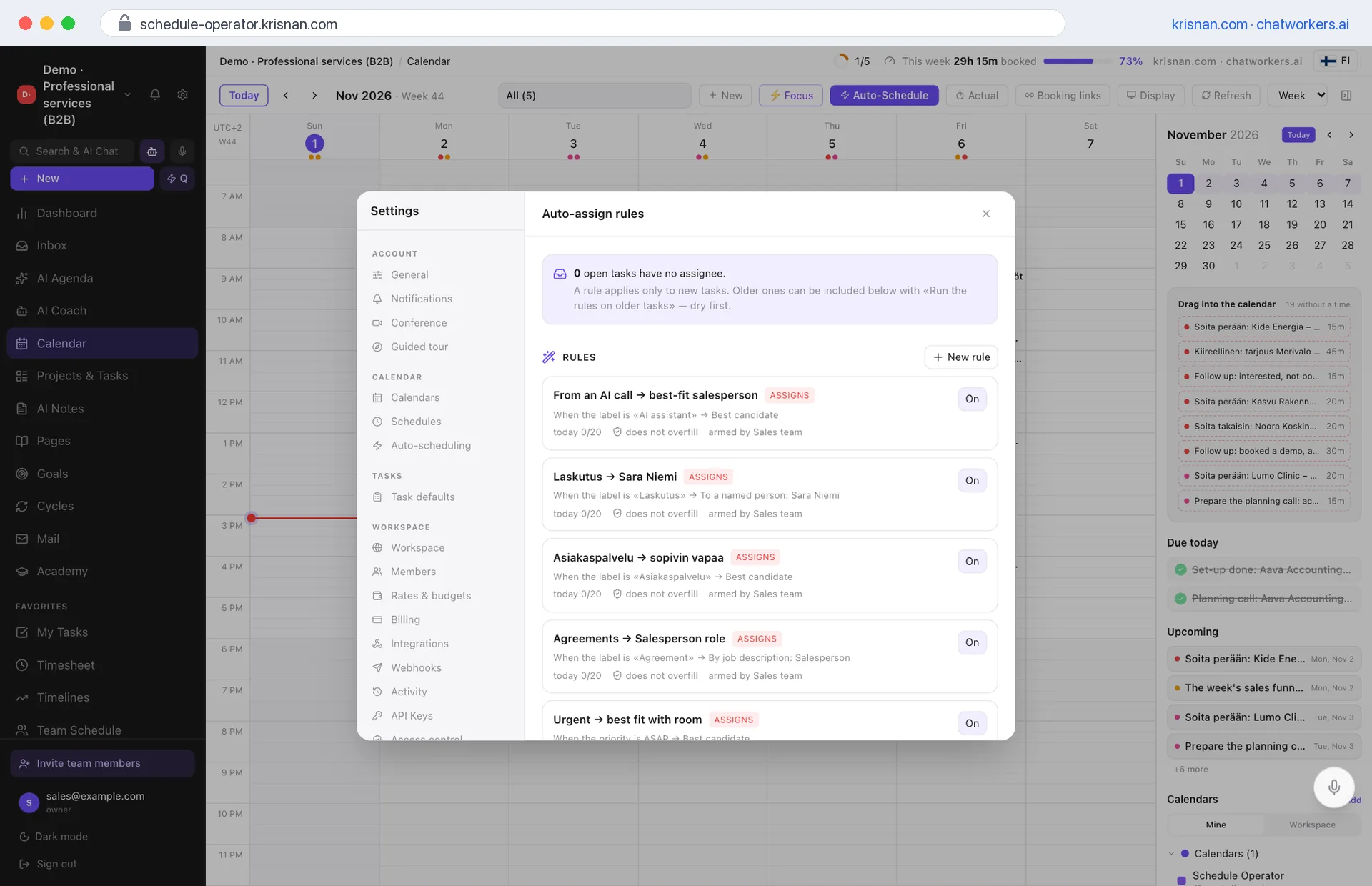
Schedule Operator does all three with assignment rules, and “Who would this suit?” explains its suggestion – or says it has no grounds to suggest anyone, which is more useful than a guess. Weekly capacity shows who is over before you hand out more – so that work lands with an owner while you stay out of it.
The question then moves from “who?” to “by when?” – and the planner answers that one too.
Recommended for you
Team Operator
€2,490 / month + €6,900
- First year
- €36,780 · 29 % of a year's value
- You keep a month
- €7,548
- The set-up fee is back in
- 25 days
Your numbers travel to the form; the assistant calls only if you ask it to.
Was this useful?